Richard Turner-Warwick
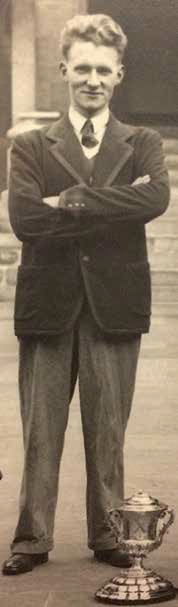
Richard Turner-Warwick
Biography
Richard Trevor Turner-Warwick CBE FRCS FRCP FRCOG (21 February 1925 – 19 September 2020) was a British urological surgeon widely regarded as the father of functional and reconstructive urology. Over a career spanning more than five decades at The Middlesex Hospital in London, he transformed the surgical management of the genitourinary tract through a unified, function-first philosophy that cut across specialty boundaries and remains the intellectual foundation of the field today.12
Early Life and Formation
Turner-Warwick was born into a medical household. His father, William Warwick, was a Consultant Vascular Surgeon at The Middlesex Hospital; his mother, Joan (née Harris), was a physician working in women's and children's welfare clinics in London's East End.3 He attended Bedales School before entering Oriel College, Oxford in 1942 to read Natural Sciences, where he was also a distinguished oarsman — President of the Oxford University Boat Club in 1946, the year Oxford won the Boat Race.1
He completed his medical training at The Middlesex Hospital Medical School, qualifying in 1949. What distinguished his formation was an uncommonly broad training: he obtained fellowships in three Royal Colleges (FRCS, FRCP, FRCOG), and his pre-surgical experience encompassed internal medicine, pathology, thoracic surgery, gynaecological surgery, and plastic surgery.3 This multi-system breadth was not incidental — it became the structural basis for his approach to pelvic reconstruction.
In 1958, supported by the Leopold Hudson Travelling Fellowship, he spent a formative year at Columbia-Presbyterian Medical Center in New York, establishing transatlantic relationships that would later sustain his global teaching programme.3
In 1950 he married Dr Margaret Moore, who became Professor Dame Margaret Turner-Warwick — a distinguished thoracic physician and the first female President of the Royal College of Physicians. She predeceased him in 2017. They had two daughters (one a Professor of Medicine), six grandchildren, and eight great-grandchildren.13
Career at The Middlesex Hospital
Turner-Warwick was appointed Consultant General Surgeon at The Middlesex Hospital in 1960. In 1963, on the retirement of Sir Eric Riches, he became Head of the Urological Department, a position he held until his retirement from NHS practice.3 Under his leadership, the Middlesex Urological Unit became one of the foremost international centres for reconstructive surgery and urodynamic investigation.
A central achievement of this period was the creation of a dedicated video-urodynamic unit — one of the first in the world to integrate synchronous video-cystourethrography with pressure-flow voiding dynamics as a routine clinical service. With collaborators including Patrick Bates, Ted Arnold, David Farrar, Roger Kirby, and Christopher Chapple, this unit produced landmark data redefining how lower urinary tract obstruction, stress incontinence, and bladder dysfunction were understood and managed.45
Surgical Contributions
Urethral stricture reconstruction. Turner-Warwick codified the surgical management of urethral stricture disease at a time when the discipline had no established framework. He developed the scrotal inlay (patch) urethroplasty — a staged technique using scrotal skin to patch the opened strictured segment — achieving success rates of approximately 90% in bulbous and membranous strictures.6 He distinguished between short defects amenable to perineal anastomotic repair and longer or complex defects requiring an abdominoperineal approach with partial pubectomy, providing a rational anatomical framework for operative planning that remains in use.7
Pelvic fracture urethral injury. His 1977 paper, "Complex Traumatic Posterior Urethral Strictures" (Journal of Urology 118[4]:564–574), remains a definitive reference on the classification and management of pelvic fracture urethral distraction defects. He identified three anatomical situations that critically impair retrograde urethral blood supply, shaping the operative logic that guides posterior urethroplasty to this day.7
Omental pedicle grafts. Turner-Warwick was among the first surgeons to systematically deploy vascularised omental pedicle grafts in urinary tract reconstruction. He recognised the omentum's unique biological properties — its capacity for angiogenesis, lymphatic drainage, and resolution of infection — and demonstrated their value in fistula repair and reconstruction in irradiated or infected fields.89 His omental interposition technique for urinary tract fistulae (British Journal of Urology, 1972) transformed the management of complex vesicovaginal and urethrovaginal fistulae.
The psoas bladder-hitch. Together with Worth, he systematised the psoas bladder-hitch (bladder-elongation psoas-hitch, BEPH) procedure for reconstruction of the lower ureter — mobilising and fixing the bladder dome to the ipsilateral psoas tendon through a contralateral oblique incision to bridge ureteric defects of several centimetres while permitting anti-reflux reimplantation.10
The vagino-obturator shelf procedure. For urodynamically confirmed stress urinary incontinence, Turner-Warwick devised a urethral repositioning operation that elevates the sphincter mechanism into a competent position without compromising its intrinsic occlusive function. An omental pedicle graft was used to prevent secondary fibrotic tethering.11
Instrument design. A hands-on engineer from childhood, he designed and manufactured custom surgical instruments in his home workshop. Several entered standard urological surgical trays and remain in use internationally.1
Philosophy of Surgery
Turner-Warwick's approach to reconstruction was organised around a small number of principles, stated and restated across four decades of teaching and writing.
Function is the goal, not anatomy. The explicit aim of reconstruction is restoration of physiological function. Anatomical continuity that does not serve function is insufficient. This principle elevated objective urodynamic assessment — not symptom description — to the foundation of surgical planning, and it pervades his 2002 magnum opus with Christopher Chapple, Functional Reconstruction of the Urinary Tract and Gynaeco-Urology (Blackwell Science), which documents each procedure in terms of the functional abnormality it addresses.12
Diagnosis before commitment. He distrusted symptom-only assessment, viewing it as a systematically unreliable guide to surgical decision-making. His most celebrated aphorism — "The bladder is an unreliable witness" — encapsulated his insistence that urodynamic, radiological, and endoscopic data must precede any reconstructive intervention.4 The phrase has entered the permanent lexicon of urodynamics.
Cross-specialty thinking. He explicitly resisted the partitioning of the genitourinary tract into subspecialty domains. His training across general surgery, gynaecology, and thoracic medicine gave him a perspective unconstrained by institutional boundaries. The 2002 textbook, covering bladder, upper tract, urethra, and pelvic organ reconstruction across sexes, is a direct expression of this unified view.
Systematic decomposition of complexity. He coined the mnemonic TITBAPIT — "you Take It To Bits And you Put It Together Again" — as a pragmatic framework for approaching apparently complex reconstructions. Reducing a difficult case to its anatomical and functional components, then addressing each in sequence, was how he taught his trainees to think.
Precision of language. He championed exact clinical terminology, invoking Lewis Carroll's Through the Looking Glass on the importance of agreed-upon definitions as a prerequisite for scientific communication.12
Selected Quotes
"The bladder is an unreliable witness."4
"There are no such things as brave surgeons, just brave patients."1
"Any reconstructive procedure is a TITBAPIT — you Take It To Bits And you Put It Together Again."12
"Place your facts in one hand, your fairies in the other, and do not go round shaking hands with yourself." — on evidence-based reasoning.1
Teaching and Mentorship
Between 1965 and 2005 Turner-Warwick undertook more than 300 surgical teaching visits to institutions in America, Australia, New Zealand, Europe, and the United Kingdom, travelling with his own portable generator and materials to demonstrate operative techniques wherever equipment was unavailable.3 He devoted a substantial proportion of his personal income to funding research fellowships at The Middlesex Hospital.
Notable trainees who passed through his unit include Christopher Chapple (his co-author and successor as a leading voice in functional urology), Leonard Zinman (a founding figure of North American reconstructive urology), Roger Kirby (Consultant Urologist, St George's Hospital; founder of The Prostate Centre), and Sanjay Kulkarni (whose own school of urethroplasty in Pune has trained a further generation of reconstructive surgeons).13
He was a founding member of the International Continence Society (ICS, established 1971) and a key instigator of the specialist examination in urology in the United Kingdom. He served on the councils of the Royal College of Surgeons and the Royal College of Obstetricians and Gynaecologists.13
Honours and Awards
| Year | Award | Body |
|---|---|---|
| 1977 | Hunterian Professorship | Royal College of Surgeons of England |
| 1978 | St Peter's Medal | British Association of Urological Surgeons |
| 1981 | Honorary Fellowship (FRACS) | Royal Australasian College of Surgeons |
| 1987 | Victor Bonney Prize | Royal College of Obstetricians and Gynaecologists |
| 1991 | Ferdinand C. Valentine Gold Medal | New York Academy of Medicine |
| 1992 | Commander of the British Empire (CBE) | HM Queen Elizabeth II |
| 1992 | Gordon Watson Medal | Royal College of Surgeons of England |
| 1997 | Honorary Fellowship (FACS) | American College of Surgeons |
| 1997 | Spence Medal | American Association of Genito-Urinary Surgeons |
| 2002 | William Didusch Award for Medical Art | American Urological Association |
| 2005 | Willy Gregoir Medal | European Association of Urology |
| 2017 | Innovators in Urology Medal | European Association of Urology (EAU17, London) |
He was BAUS's oldest member at the time of his death. He died on 19 September 2020 at the age of 95.2
Key Publications
- Turner-Warwick R, Wynne EJC, Handley-Ashken M. "The use of the omental pedicle graft in the repair and reconstruction of the urinary tract." Br J Surg. 1967;54(10):849–853. PMID 6047268
- Turner-Warwick R. "The repair of urethral strictures in the region of the membranous urethra." J Urol. 1968;100(3):303–314.
- Warwick R, Worth PHL. "The psoas bladder-hitch procedure for the replacement of the lower third of the ureter." Br J Urol. 1969;41:701–709.
- Turner-Warwick R. "The use of pedicle grafts in the repair of urinary tract fistulae." Br J Urol. 1972;44:644–656.
- Warwick R et al. "A urodynamic view of prostatic obstruction and the results of prostatectomy." Br J Urol. 1973;45(6):631–645.
- Turner-Warwick R. "The use of the omental pedicle graft in urinary tract reconstruction." J Urol. 1976;116(3):341–347. PMID 785032
- Turner-Warwick R. "Complex traumatic posterior urethral strictures." J Urol. 1977;118(4):564–574.
- Turner-Warwick R, Chapple CR. Functional Reconstruction of the Urinary Tract and Gynaeco-Urology. Blackwell Science; 2002.
Preferred Instruments & Setup
Content coming soon.
Videos & Media
Content coming soon.